

How to Sell Safely Online in Ireland
Updated 14 November 2026
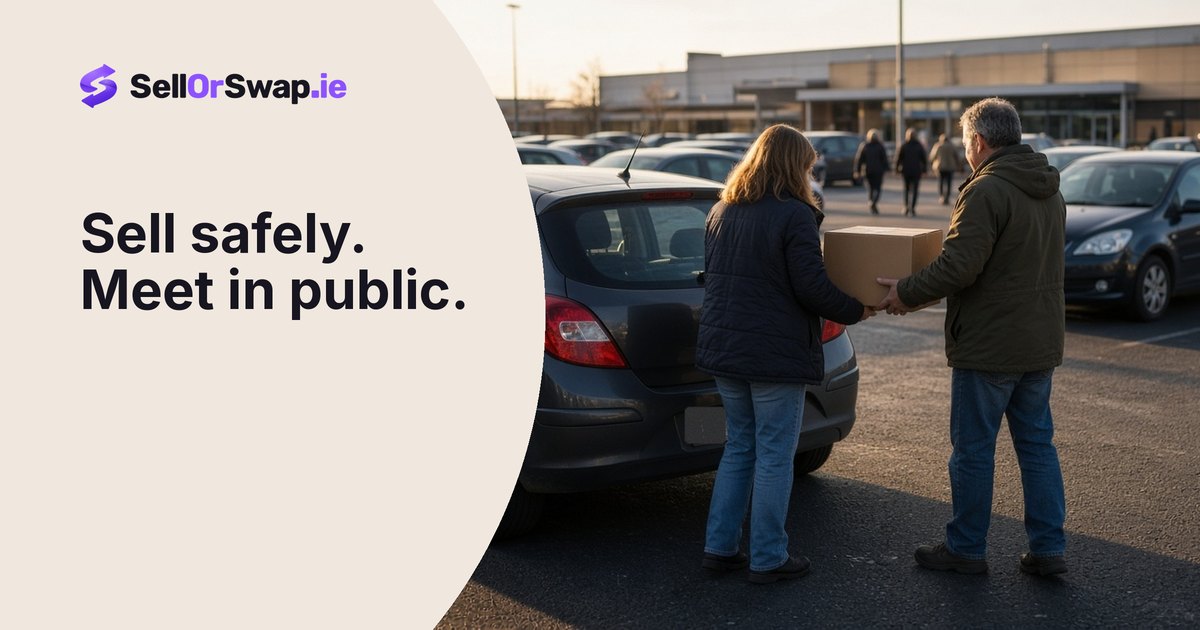
Most private sales in Ireland go smoothly. The ones that do not usually share the same warning signs: a price that makes no sense, a rush to move the chat off the app, or a request to send money or goods before anyone has checked anything.
This guide is for people selling everyday items online, whether you meet locally or post the item. It brings together SellOrSwap's safety advice and official guidance from An Garda Síochána and the Competition and Consumer Protection Commission (CCPC). It is practical advice, not legal advice, and not a promise that every sale is risk-free.
Check Who You Are Dealing With
Before you agree to anything, read the person's profile. On SellOrSwap, look for the ID Verified badge. That badge means they passed a passport or driving licence check with a selfie. Also read their reviews and see how long they have been a member.
Keep the conversation in the app. That leaves a record if something goes wrong. An Garda Síochána advise shoppers not to move off a selling platform for a lower cash price, and the same habit protects sellers. Be careful if someone wants to switch to WhatsApp or email straight away, or if they are in a great rush and will not answer simple questions.
The CCPC's advice for marketplace sellers is clear: do not click a link a buyer sends you, and do not hand over bank details that could give someone access to your accounts.
Meet Somewhere Safe
If you are handing the item over in person, meet in a busy public place in daylight. SellOrSwap's safety page suggests a spot in public view, for example outside a Garda station, a busy shopping centre car park, or a staffed service station forecourt. Gardaí do not supervise or endorse sales, and smaller stations may not be staffed, so check the place is actually busy before you go.
Bring a friend if you can, and tell someone where you are going. Do not invite strangers to your home, and do not go to theirs, unless the item is something large like furniture. If you do have to meet at a house, have someone with you.
For high-value items, give yourself time to check the item in that public place. Do not be rushed into a handover in an empty car park or a side street.
Paying and Getting Paid
How you get paid is where most scams sit.
Card payments through SellOrSwap are the safest option we offer. The money is held until the handover is confirmed, then released to you, and it usually reaches your bank about a week later. Posted items are released automatically after seven days, and a dispute pauses that release. The buyer pays a Buyer Protection fee, and a 2% fee comes from the seller's payout. Live figures are on the Pricing page.
Cash in person is free for both of you. Count the money at the handover and check the item works before either of you walks away. Do not accept a promise that the cash will be sent later.
Never send or accept payment by bank transfer, Revolut or gift cards to someone you have not met. That is the most common scam pattern we warn about on our Safety Tips page. An Garda Síochána likewise say that where a platform offers an official, safe way of paying, you should use it rather than sending money to a third party, and that gift cards, wire transfers or cryptocurrency are a red flag.
Never send codes you get by text to anyone. SellOrSwap will never ask for them. Do not use public Wi-Fi when you are making or confirming a payment.
If you are the seller, wait until the money has actually arrived in your own account or in the app before you hand over the item. A screenshot of a transfer is not enough. The CCPC describes a typical scam: a buyer "accidentally" overpays and asks you to refund the difference, but the original payment is bogus, leaving you down the item and the extra money.
Warning Signs of a Scam
Walk away, or at least slow down, if you see any of these:
- A price, or an offer, that is far too good to be true. The CCPC's golden rule for marketplaces is that if it seems too good to be true, it probably is.
- Someone who will not meet, will not use the app's payment tools, and wants to pay or be paid off-platform.
- A buyer who offers to overpay and asks you to send back the difference.
- Links in messages that ask you to "confirm" a payment or log in to a site that is not sellorswap.ie.
- Pressure to decide immediately, or a story that keeps changing.
Sellers can be the target as well as buyers. An Garda Síochána have described cases where a person handed over a phone at a meeting and the promised payment never arrived. Confirm the money first, then hand over the item.
Know Where You Stand on Consumer Rights
The CCPC says rights under consumer law apply when you buy from a business, including a sole trader. If you buy from another private person, for example on a second-hand website or app, it is generally "buyer beware": the buyer is responsible for checking the item before they pay.
If you are selling as a private person, be honest in the ad. Show faults in the photos and mention them in the description. A business or trader must not pretend to be a private seller to avoid their legal obligations; the CCPC calls this disguised trading and says it is illegal.
This is not a substitute for official advice. If you are unsure about your rights, read the CCPC's guidance on buying second-hand goods, or contact them.
If Something Goes Wrong
On SellOrSwap, tap Report on the ad or profile and our team will look at it. Keep the messages, photos and any receipts.
If you think a crime has happened, contact your local Garda station. If you have given out bank or card details, tell your bank as well. In an emergency, ring 112 or 999.
A Short Safety Checklist
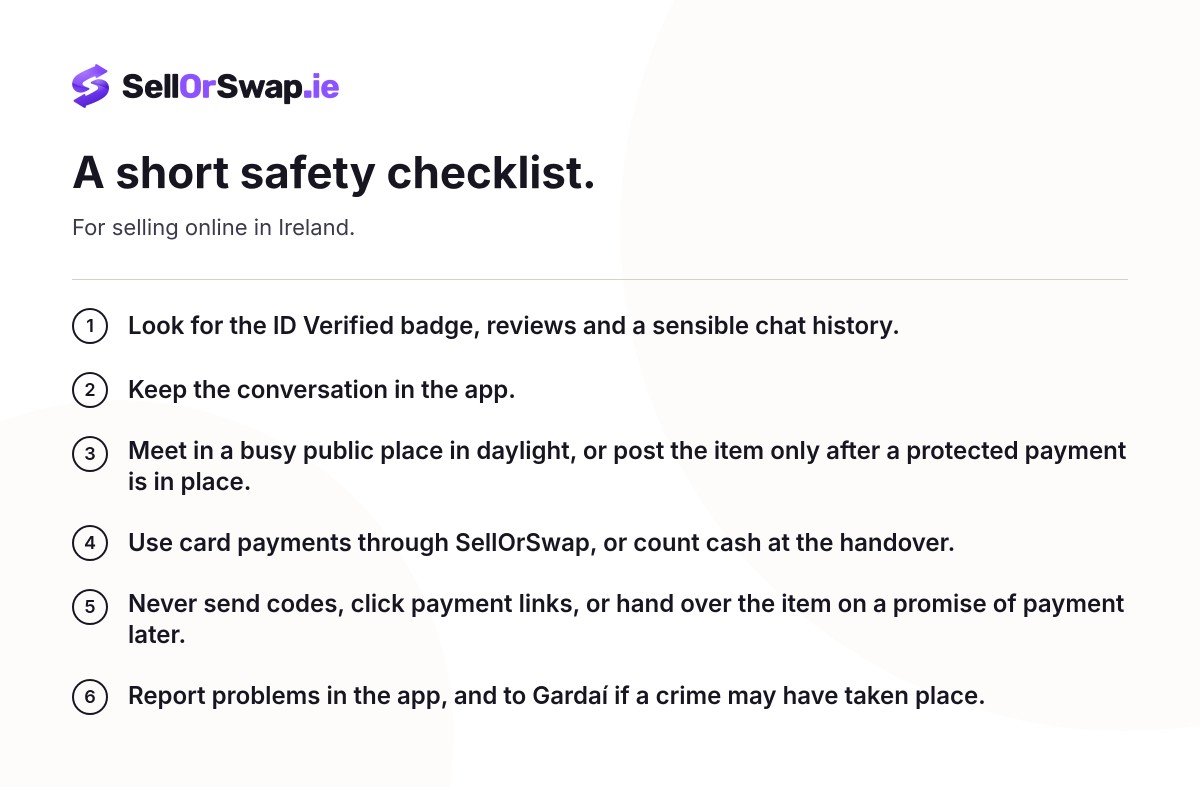
- Look for the ID Verified badge, reviews and a sensible chat history.
- Keep the conversation in the app.
- Meet in a busy public place in daylight, or post the item only after a protected payment is in place.
- Use card payments through SellOrSwap, or count cash at the handover.
- Never send codes, click payment links, or hand over the item on a promise of payment later.
- Report problems in the app, and to Gardaí if a crime may have taken place.
For the full list of our own tips, see Safety Tips. How It Works also walks through buying, selling and swapping step by step.
FAQ
Is it safe to meet a buyer at my house?
Only if the item is too big to move easily, and only if someone is with you. For anything you can carry, meet in a busy public place.
Can I take a bank transfer from someone I have not met?
We advise against it. Use card payments through SellOrSwap, or take cash when you meet and have checked the item.
Does the ID Verified badge mean the person is genuine?
It means they passed an ID check with a passport or driving licence and a selfie. It is a useful signal, not a guarantee that a sale will go perfectly. Still follow the other steps.
What if a buyer wants to pay more than the asking price?
Treat that as a warning sign, especially if they then ask you to send money back. Wait until any genuine payment has actually cleared, and do not refund a difference on a payment you cannot see in your own account.
What should I do if I think I have been scammed?
Report the ad or profile on SellOrSwap, contact your bank if money or card details are involved, and contact your local Garda station if you think a crime has happened.